
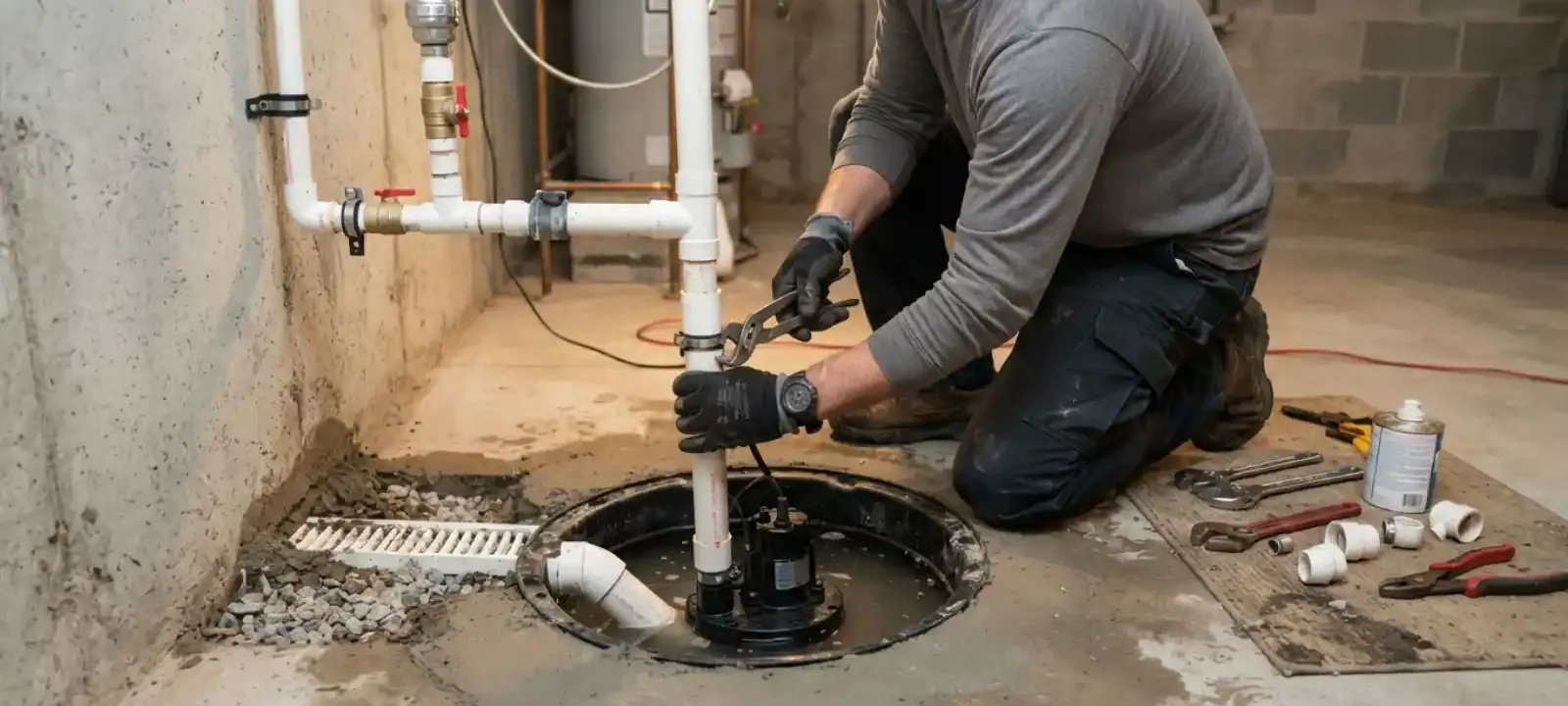
A sump pump that stops during a storm leaves a basement to fill from the floor up. Lodi Pro Plumbing repairs and replaces sump pumps 24/7 in Lodi, NJ, and a failed pump with water rising is treated as a same-day emergency.
While you wait, check that the pump is plugged in and the GFCI outlet has not tripped, lift the float by hand to see if the pump starts, and move anything valuable off the floor.
A sump pump sits in a pit in the lowest part of the basement. When groundwater fills the pit, a float switch turns the pump on and sends the water out through a pipe to the yard or a drain. When the pump fails, the pit overflows and the floor floods.
Sump pump dead and water rising? Call (973) 488-5410 now for emergency help.
Call (973) 488-5410Why Lodi basements need a working sump pump
Lodi sits along the Saddle River, and low parts of the borough take on water in heavy rain. CBS New York reported after the remnants of Hurricane Ida in September 2021 that sections of the city sat under several feet of water, and a Saddle Brook resident told the station that water reached his basement for the first time in 15 years.
In March 2024 the river crested overnight and covered Main and Sydney streets, and the same story mentions a shipping container that lodged under a bridge in January and left basements flooded.
River flooding is bigger than any sump pump can handle, and a pump cannot stop water coming over the banks. What it does handle is the groundwater that rises in the soil around your foundation and the water that seeps in after heavy rain. A working pump with battery backup is the first defense.
Why sump pumps fail
| Failure | What causes it | How to fix it |
|---|---|---|
| Pump runs but does not move water | Clogged intake, failed check valve or frozen discharge | Clean the intake and replace the valve |
| Pump does not start | Stuck float, tripped outlet or dead motor | Free the float, reset the outlet or replace the pump |
| Pump runs constantly | High groundwater, stuck float or a failed check valve | Check the float and the check valve |
| Pump stops during a storm | Power outage | Add a battery backup or a water-powered backup |
| Pump is noisy | Worn bearings, debris or a bent impeller | Clean or replace |
A pump that sits unused for months can seize. The most common cause of a failure during the first big storm is a pump that was never tested.
Testing your pump
A five-minute test is worth doing every spring and fall:
- Pour a few buckets of water into the pit until the float rises.
- The pump should start, empty the pit and shut off.
- Listen for grinding, rattling or humming without pumping.
- Check that water leaves through the discharge pipe outside, away from the foundation.
- Look for debris in the pit and clean it out.
If the pump does not start, check the plug and the outlet first. If it still fails, call before the next storm.
Choosing and installing a pump
Two main types fit most homes, and the plumber helps you choose:
- Submersible pumps sit in the pit, run quietly and cope with solids better.
- Pedestal pumps have the motor above the pit, cost less and are easier to service, but are louder.
A proper installation covers more than the pump. The plumber sets a pit liner with a cover, adds a check valve in the discharge line so water does not flow back, runs the discharge pipe to a place where water does not come back toward the house. The pump goes on a dedicated GFCI circuit. Many homes also need a battery backup.
Battery backup and power outages
Heavy storms often cause power outages, and an electric pump stops with the power. A battery backup pump runs on a deep-cycle battery and keeps working for hours. A water-powered backup uses municipal water pressure and needs no battery, but it uses a lot of water and is not allowed everywhere. The plumber explains the choice, and installs an alarm that sounds when water in the pit gets too high.
A backup is only as good as its battery. Test it at least twice a year, and replace the battery every few years as the maker advises.
What decides the cost of sump pump work
- Repair or replace
- A float switch or a check valve is small. A new pump costs more.
- New pit
- Cutting the floor and setting a liner adds labor and materials.
- Backup
- A battery backup or an alarm is a separate add-on.
- Discharge
- A long or difficult discharge run adds pipe and time.
You get a clear price before work starts, whether the call comes in the afternoon or during a storm.
What to do while a basement is flooding
Safety comes first. If water is rising toward outlets, appliances or the panel, do not wade in. Turn off power at the main breaker only if you can reach the panel without standing in water, and call the electric utility if you cannot.
Do not run a wet vacuum plugged into a wet outlet. Photograph the damage for your insurance claim, and once the plumber has the pump running, call a restoration company to dry the space.
For help with flooded streets and storm drains, the Lodi borough website lists a Stormwater Management page under Public Works.
Sump pump questions
Do you repair sump pumps at night or on weekends in Lodi?
Yes. The line is open 24/7. A failed pump with water in the basement is a same-day call, and the plumber gives a clear price before work starts.
How often should a sump pump be replaced?
That depends on use and quality. A pump that runs often wears faster. Test it every spring and fall, and replace it when it starts to fail or grows noisy.
Does a battery backup really matter?
Yes, because storms that cause flooding often cause power outages. A backup keeps the pump running when the power is off.
Can a sump pump handle river flooding?
No. A sump pump handles groundwater and seepage. River water coming over the banks is a different problem, and no pump can stop it.
Where should the discharge pipe go?
Away from the foundation and to a place where the water will not run back to the house. The plumber checks the route before installing it.
Code basis. Plumbing work in New Jersey follows the state plumbing subcode, N.J.A.C. 5:23-3.15, which adopts the 2021 National Standard Plumbing Code. Ask which permits apply to your job and confirm with the Lodi Building Department.