
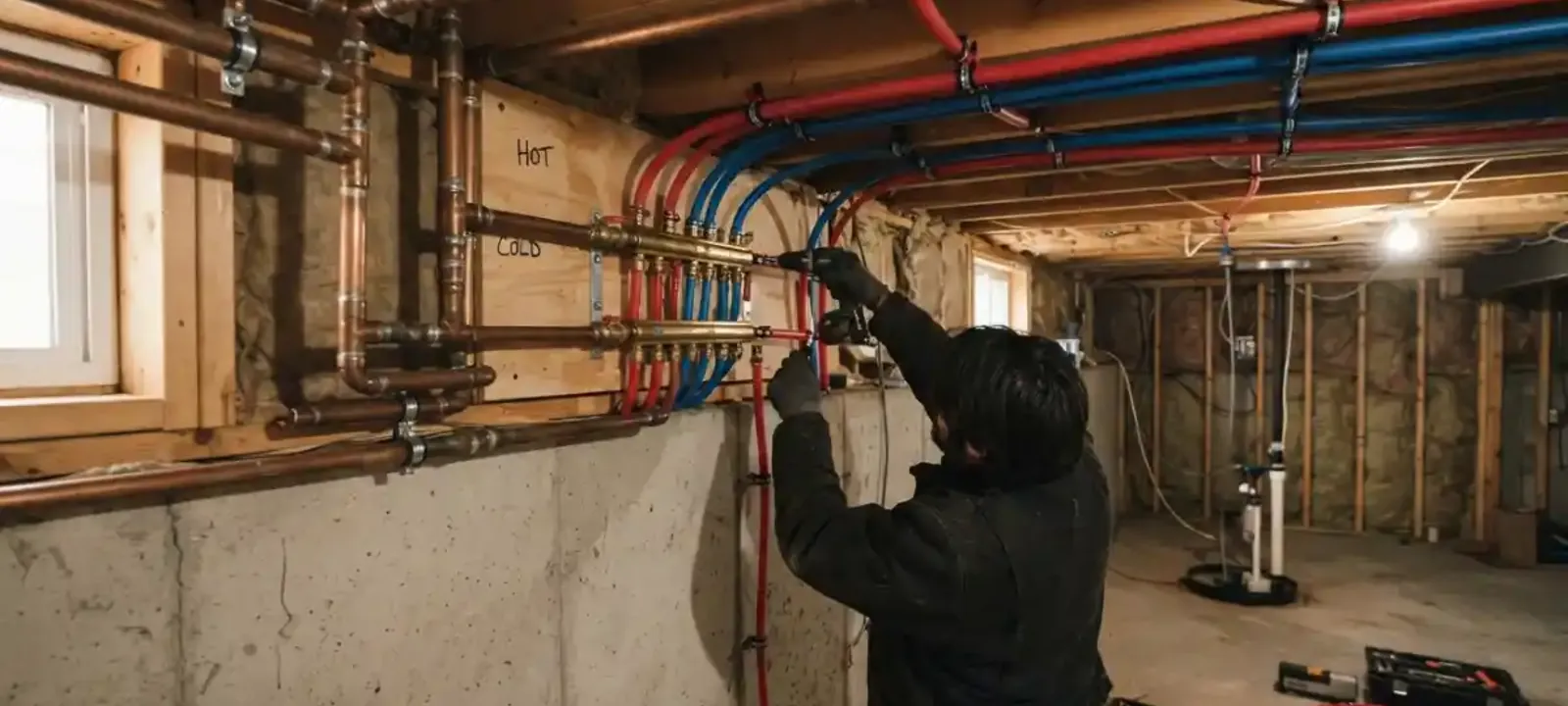
Repiping means replacing the supply pipes that bring water to every fixture in the house. It is a larger project than a repair, and it is the right answer when pipes are failing faster than they can be patched.
Lodi Pro Plumbing plans repiping jobs in Lodi, NJ so the work is scheduled, priced up front and done with as little disruption as possible. If a pipe has already burst, the burst pipe page covers the emergency first.
This page explains when repiping makes sense, what materials are used, how the work is done in an occupied home and what to ask before you agree to it.
Signs your supply pipes are near the end
One leak does not call for a repipe. A pattern does:
- Pinhole leaks that appear in different places over a short time.
- Brown or orange water from taps that clears after running for a while.
- Low water pressure at several fixtures even after aerators are clean.
- Visible green crust, flaking or bulging on exposed pipe.
- Water that tastes or smells of metal.
- A history of repairs on the same line.
Galvanized steel pipe corrodes from the inside and narrows over time, so pressure drops long before a leak shows. Copper can develop pinholes from the inside, especially where water chemistry and flow speed combine badly. Repeated repairs on either is a sign the whole line is tired.
Seeing repeated leaks or rusty water? Call (973) 488-5410 and describe what you have found.
Call (973) 488-5410Pipe materials compared
| Material | Strengths | Trade-offs |
|---|---|---|
| Copper | Long track record, heat tolerant, widely accepted | Higher material cost, needs soldered joints |
| PEX | Flexible, fewer joints, quicker to install in walls | Not for outdoor sun exposure, needs the right fittings |
| CPVC | Low cost, rigid | Can become brittle, less forgiving of movement |
| Galvanized steel | Existing in older homes | Corrodes inside, not used for new work |
Copper and PEX are the two choices most homeowners weigh. The plumber explains which suits the house, the budget and the access, and shows where each would run.
What the water in Lodi means for old pipe
The Passaic Valley Water Commission's 2026 report for Lodi lists pH between 7.92 and 8.38 at the Little Falls plant, hardness from 106 to 242 ppm and alkalinity from 54 to 89 ppm. Hardness tends to leave scale in pipes, which can narrow older steel and copper over time. PVWC also reported a lead 90th percentile of 0.85 ppb, with 0 of 35 samples above the 15 ppb action level.
PVWC publishes a service line inventory online. Repiping the inside of the house is a separate question from the service line, which is covered on our water service line page. If you are in Saddle Brook, the township's own 2026 report says lead in drinking water is primarily from service lines and home plumbing, and its Water Department can answer service line questions.
How a repipe is done in an occupied home
A well-planned repipe takes days, not weeks, and the crew works to keep water on as much as possible.
- Survey the house, count fixtures and decide the routing.
- Agree on the schedule and the access points where walls or ceilings will be opened.
- Shut off the water, run new lines to each fixture and connect them to the main.
- Pressure test every line before any wall is closed.
- Restore water, flush the lines and check every fixture.
- Patch the openings or hand the patching list to your contractor.
Most repiping needs small openings in drywall, usually in closets, behind fixtures and in basements. The plumber lists where each opening will be, so nothing surprises you.
Repipe or repair: how to decide
A good way to decide is to count leaks and ask what a repair buys. If a single pipe has failed and the rest is sound, repair it. If a second and third leak appear within a year, add up the repair costs, the water damage and the stress, and compare that with a planned repipe.
The plumber can show you the inside of a cut pipe so you see the corrosion for yourself.
What decides the cost of a repipe
- House size
- Number of bathrooms, kitchens and fixtures drives pipe length and labor.
- Material
- Copper costs more than PEX in most cases.
- Access
- Finished walls, plaster and slab foundations take more time than open basements.
- Patching
- Wall repair after the work may be included or handled by your contractor.
You get a written price before work starts, with the material, the scope and the schedule stated.
Repiping questions
How long does a whole house repipe take?
Most houses take two to five working days, depending on size and access. The plumber gives you a schedule before the work starts.
Will I be without water the whole time?
No. The crew shuts the water off for part of each day, and keeps it on for the rest where possible. You will know the schedule in advance.
Is PEX as good as copper?
Both are accepted materials when installed properly. PEX is faster and flexible, and copper has a longer track record. The plumber explains the trade-offs for your home.
Do I need a permit?
Repiping often requires a permit. Lodi's website lists a Building Department page, and the plumber tells you what applies to your address.
Can you repipe just part of a house?
Yes. A partial repipe, such as one bathroom or one branch, is common and makes sense when the rest of the system is sound.
Code basis. Plumbing work in New Jersey follows the state plumbing subcode, N.J.A.C. 5:23-3.15, which adopts the 2021 National Standard Plumbing Code. Ask which permits apply to your job and confirm with the Lodi Building Department.