
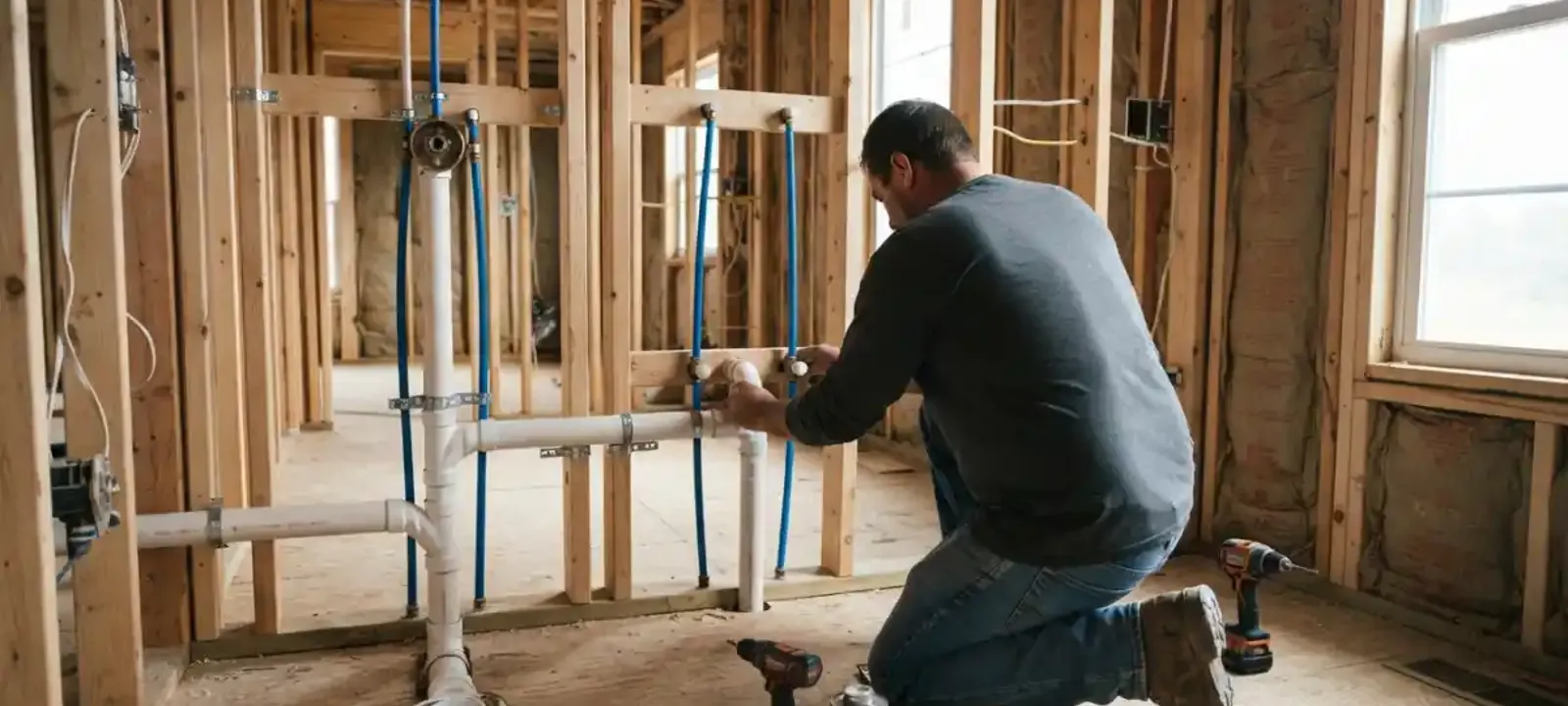
Plumbing installation is the work of adding or moving the pipes and fixtures in a building. It covers a new sink, a relocated laundry, an added bathroom and the supply and drain lines behind them. Lodi Pro Plumbing does installation work in Lodi, NJ, and the price is stated before work begins. This page explains what the work involves and what to settle before the crew arrives.
If your problem is a leak or a clog, start with the repair pages instead, such as faucet repair or drain cleaning. Installation is for new work you are choosing to do.
What counts as installation work
Typical jobs include:
- A new kitchen sink, faucet and dishwasher hookup.
- A new or relocated bathroom, with supply, drain and vent lines.
- A washing machine box and drain in a new laundry spot.
- A basement bathroom, a utility sink or a wet bar.
- An outdoor spigot or a hose bib.
- New shutoff valves, pressure regulators and expansion tanks.
- Gas appliance connections, where the plumber is licensed to make them.
Installing one fixture where pipes already exist is straightforward. Adding a fixture far from existing lines means new runs of pipe and a vent, and that is where planning pays off.
Planning new plumbing work? Call (973) 488-5410 and tell us what you want to add or move.
Call (973) 488-5410The three things every installation needs
A fixture needs supply, drain and vent, and each has rules:
- Supply: hot and cold lines sized for the fixture, with a shutoff valve at each.
- Drain: a pipe sized and sloped so waste flows away, with a trap to block sewer gas.
- Vent: an air path so the trap does not siphon dry and the drain flows smoothly.
The vent is the part people forget. Without it, a new fixture can gurgle, drain slowly and smell. Our plumber maps the vent route before any pipe is cut, which avoids surprise openings in walls and ceilings.
Before the plumber arrives
Choose the fixtures
Pick the toilet, sink or faucet first, because the rough-in dimensions come from the product sheet.
Mark the location
Decide where each fixture goes, and note where the nearest water and drain lines are.
Clear access
Move items from the basement, crawl space or wall so the plumber can see the existing lines.
Ask about permits
Check with the borough about permits for the work, and tell the plumber what you learn.
Fixtures that arrive late are a common cause of delays. If a part is back-ordered, the plumber can rough in the pipes and come back for the finish.
Code, permits and inspection in New Jersey
Plumbing work in New Jersey falls under the Uniform Construction Code. The plumbing subcode, N.J.A.C. 5:23-3.15, adopts the 2021 National Standard Plumbing Code. That code sets pipe sizes, venting, trap rules and test requirements.
Permits are issued locally. The Lodi borough website lists a Building Department page, and the plumber tells you whether your job needs a permit and an inspection. New Jersey also requires master plumbers to be licensed by the State Board of Examiners of Master Plumbers, according to the Division of Consumer Affairs. Hiring a licensed plumber protects you if the work later fails inspection.
Water pressure and local water
Installation is a good time to check the supply. The plumber measures static pressure at a hose bib, and if it is high, recommends a regulator and an expansion tank to protect new fixtures. Hardness matters too. The Passaic Valley Water Commission lists 106 to 242 ppm at its Little Falls plant, and new faucets, dishwashers and water heaters will all collect scale at that level.
A shutoff valve at each fixture and unions at the water heater make future service simpler.
What decides the cost of installation work
- Distance
- A fixture next to existing lines costs less than one that needs a long new run.
- Access
- Open basements are quicker than finished walls and slabs.
- Materials
- Copper, PEX and the fixtures you choose change the price.
- Permit
- Permit fees and inspections are listed separately.
The plumber gives a clear price before starting, and explains what is included and what is not.
Plumbing installation questions
Can you install fixtures I bought myself?
Yes. Check the rough-in and the product sheet before you buy, and the plumber confirms they fit. We cannot warrant the fixture itself.
Do I need a permit to add a bathroom?
In most cases yes. Check with the borough's Building Department, and the plumber explains how it applies to your job.
How long does it take to add a bathroom?
Plumbing rough-in for a new bathroom usually takes a few days, plus finish time after the walls and floors are done. The plumber gives you a schedule.
Can you work with my general contractor?
Yes. We coordinate with contractors and inspectors so the plumbing stage fits the project schedule.
Do you move gas lines?
Gas work has safety and code requirements. The plumber tells you what we can do and what needs a separate licensed trade.
Code basis. Plumbing work in New Jersey follows the state plumbing subcode, N.J.A.C. 5:23-3.15, which adopts the 2021 National Standard Plumbing Code. Ask which permits apply to your job and confirm with the Lodi Building Department.