
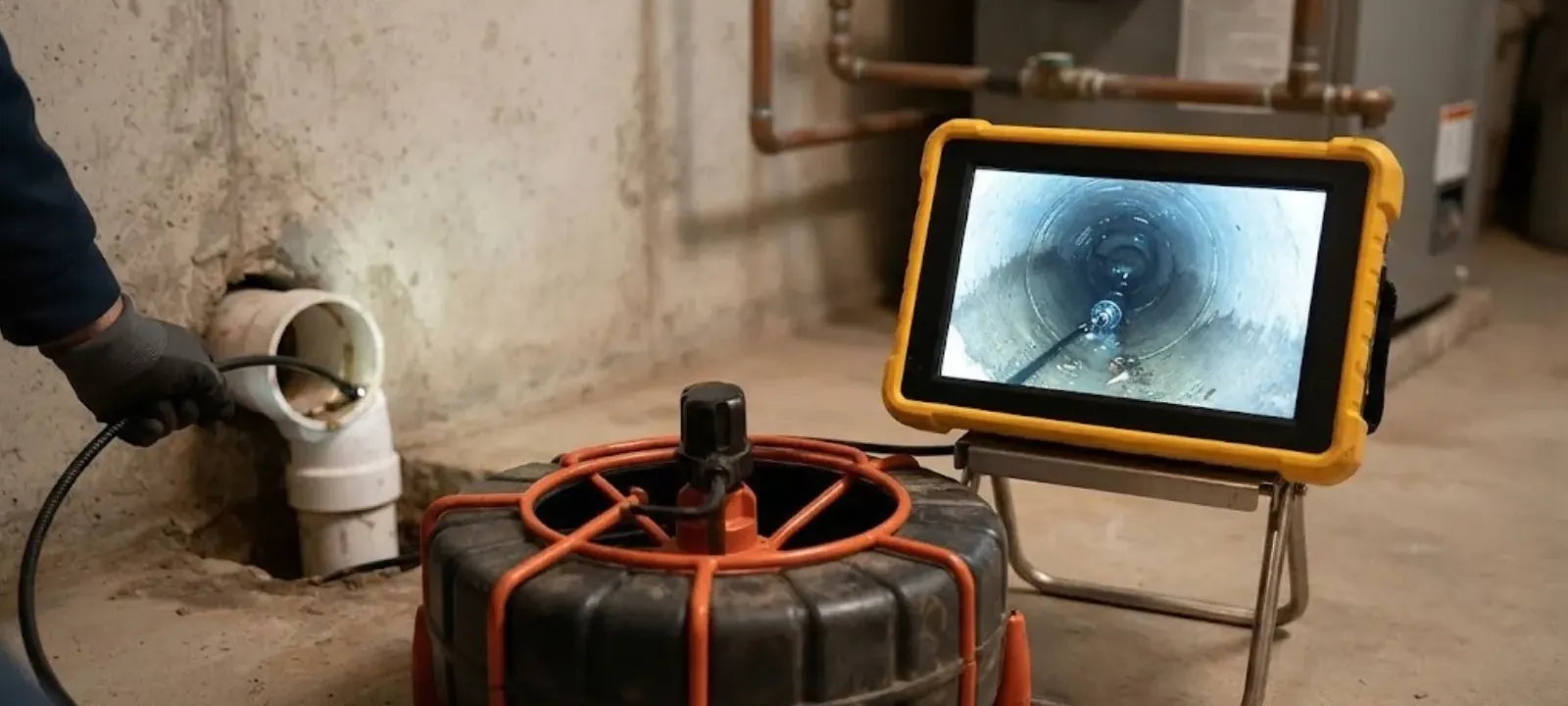
Sewer pipe lining is a trenchless repair. A flexible tube soaked in resin is pulled or pushed into the damaged pipe, inflated and cured until it hardens into a new pipe inside the old one. The method can seal cracks, joints and small holes without digging up the yard.
It does not fit every case. This guide explains how it works, what must be true for it to work and what to ask before you agree to it. We do not publish dollar figures, since we have no verified local pricing.
Lining is one tool among several. The right choice depends on what the camera shows.
How lining works
- A plumber cleans the line, often with hydro jetting, to remove roots, scale and debris.
- A camera inspects the pipe to confirm its condition and map its length.
- The liner, a tube coated with resin, is inserted through an access point such as a clean-out.
- The tube is inflated against the pipe wall.
- The resin cures with heat, steam or light until it hardens.
- Cutters reopen side connections, and a final camera run checks the result.
The new pipe is thin but strong, with no joints for roots to enter. It reduces the diameter slightly, which can affect flow. A good installer accounts for that.
Think your sewer line needs lining? Call (973) 488-5410 and describe the symptoms.
Call (973) 488-5410When lining is a good fit
| Condition | Lining | Digging |
|---|---|---|
| Cracks and open joints | Good fit | Not needed |
| Root intrusion | Good fit after cleaning | Used if the pipe is crushed |
| Pinhole corrosion | Good fit | Not needed |
| Collapsed pipe | Not possible | Required |
| Large sag or belly | Not a fix | Required to regrade |
| Offset joint | Depends on size | Often required |
| Pipe under a building or driveway | Strong case for lining | Costly and disruptive |
Lining works when the pipe is still round and continuous. It cannot fix a pipe that has collapsed or shifted so far that the liner cannot pass. It also cannot correct a low spot where water collects. The camera inspection tells you which case you have, and a plumber should show you the footage.
Questions to ask before you agree
- What does the camera show, and can I see it?
- Is the pipe round enough for a liner?
- What material and warranty does the liner have?
- How will side connections and the clean-out be handled?
- What happens if the line cannot be lined?
Ask for a written scope with the length of the line to be lined. A good plumber will say so when lining does not suit the pipe and will quote the alternative. See sewer inspection for how the camera work is done, and sewer line repair for the full range of options.
What decides the cost of sewer lining
- Length
- A longer run takes more material and time.
- Prep
- Heavy roots or scale need cleaning first.
- Access
- A clean-out near the street side speeds the job.
- Connections
- Each side connection must be reopened.
Lodi Pro Plumbing states the price before work starts and explains the camera findings behind it.
Lining and permits
Lining changes a pipe that is part of the building drain system, and that can bring a permit requirement. New Jersey's plumbing subcode, N.J.A.C. 5:23-3.15, adopts the National Standard Plumbing Code, 2021 edition. The borough's Building Department handles permits in Lodi, so ask whether your job needs one. A licensed plumber should pull permits when needed. Ask the installer how they handle it.
Roots, scale and why lines fail
Roots enter pipes at joints, looking for water. They grow, block flow and widen cracks. Clay and cast iron pipes, common in older lines, can corrode or crack. Cleaning removes roots, but they return unless the joints are sealed, and a liner removes the openings roots use. Without that, repeat cleaning is needed.
Sewer lines, storm water and the regional system in Lodi
Lodi's sewage flows into the regional system run by the Passaic Valley Sewerage Commission, which the borough's website links to. During heavy rain, storm water can enter old sewer lines through cracks, a problem called infiltration. After the remnants of Hurricane Ida in September 2021, CBS New York reported that sections of the city were under several feet of water.
A cracked private lateral lets groundwater in, which adds to the load on the system. Sealing it helps your own line, and lining can do that. If a basement drain backs up during storms, ask a plumber whether the cause is your lateral or the municipal line. Neighbors in Hackensack and Saddle Brook have the same question.
After lining
Expect a short wait while the resin cures and a final camera check. Use fixtures normally once the plumber says it is safe. Keep the video for your records, since it documents the work for a future sale. Avoid flushing wipes and pouring grease, which still clog a lined pipe.
Getting a second opinion
Lining is a big decision, so a second look is reasonable. Ask a second plumber to review the camera footage, or have the line scanned again before work starts. Compare what each says about the pipe's shape, its length and any breaks. If two plumbers agree that the pipe qualifies for lining, you can proceed with more confidence. If they disagree, ask each to explain what they see on the footage.
Watch for a plan that skips the camera entirely. A liner should never be ordered without a look at the pipe, because the wrong size or a hidden collapse leads to a failed job.
Planning around the work
Lining is quieter than digging, but it still affects the house. Water use stops while the liner cures, so plan showers, laundry and dishes around the visit. Ask how long the line will be out of service, and whether a temporary arrangement is needed. Clear the area around the clean-out so the crew can set up equipment, and keep pets away from the work area.
Keeping the lined pipe healthy
A lined pipe is still a drain. Treat it with care. Use drain screens in tubs and sinks, keep grease out of the kitchen drain and flush only toilet paper. Have the line scanned again after a few years to confirm it is in good shape, and keep the final camera video with your home records.
Sewer lining questions
Does lining need any digging?
Usually a small access hole at most. Some jobs use an existing clean-out and need none.
How long does a liner last?
Makers state a design life, and the actual life depends on installation and use. Ask for the warranty in writing.
Can a lined pipe still clog?
Yes, from grease or wipes. Lining removes cracks where roots enter but does not prevent a clog.
Will a liner shrink the pipe?
Slightly. A well-chosen liner keeps flow adequate, but ask the installer about it.
Is lining allowed in Lodi?
Check with the borough's Building Department about permits. A plumber can handle the paperwork.
Code basis. Plumbing work in New Jersey follows the state plumbing subcode, N.J.A.C. 5:23-3.15, which adopts the 2021 National Standard Plumbing Code. Ask which permits apply to your job and confirm with the Lodi Building Department.