
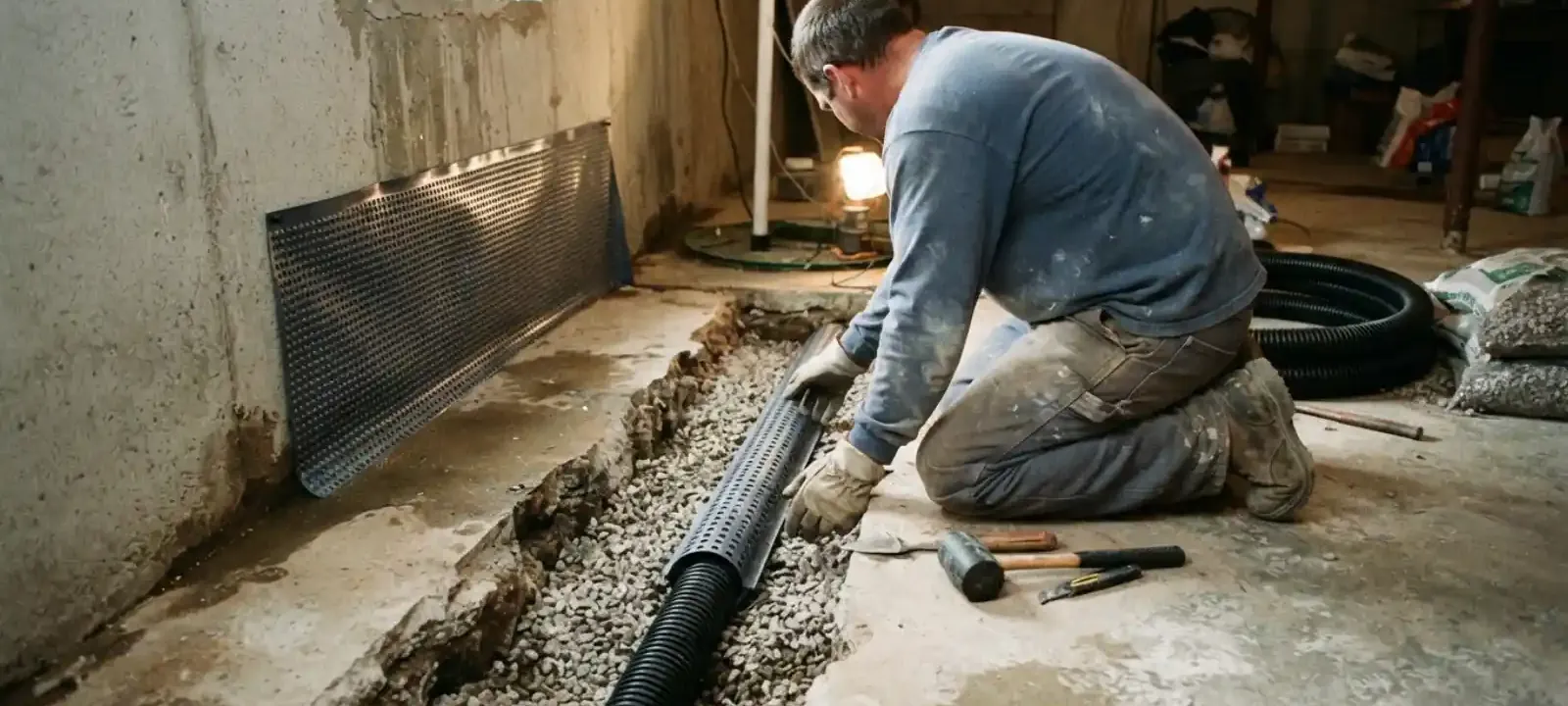
Interior basement waterproofing does not stop water from reaching the foundation. It gives the water a path to a pump, so it leaves the basement instead of spreading across the floor. The method suits many homes because the work happens inside, without digging up the yard.
The price depends on how much wall it covers, how the water enters and what else the basement needs. We leave out dollar figures, since we have no verified local pricing to publish.
Before you pay for any system, find out why the basement is wet. A fix for the wrong cause wastes money.
How an interior system works
The usual system has four parts. A channel or pipe runs along the base of the walls under or beside the floor slab. It collects water that seeps through the wall or comes up at the joint. The channel slopes toward a sump pit. A pump in the pit sends the water outside through a discharge pipe. A sealed liner on the wall guides moisture down into the channel.
| Part | What it does | Where it sits |
|---|---|---|
| Drain channel | Collects water along the wall | Along the footing or under the slab edge |
| Wall liner | Directs seepage down into the channel | On the lower wall |
| Sump pit | Holds the collected water | At a low point |
| Pump | Sends water out | In the pit |
| Discharge line | Carries water away from the house | Outside, sloped away |
| Vapor barrier | Reduces moisture in the air | Crawl space floor or walls |
Wet basement? Call (973) 488-5410 and describe where the water appears.
Call (973) 488-5410Find the source first
Water enters a basement in a few ways. Check these before you buy anything:
- Gutters and downspouts that dump water by the foundation.
- Soil that slopes toward the house.
- Cracks in the wall or floor.
- The joint where the wall meets the floor.
- Plumbing leaks from supply or drain lines.
- Groundwater that rises under the slab after heavy rain.
Fix surface problems first, because they cost less. Extend the downspouts, regrade the soil and seal obvious cracks. If water still comes in, an interior system is a reasonable step. A plumbing leak is a different case, and the leak detection page explains how plumbers find hidden leaks.
What decides the price
The length of the walls covered matters most, since the channel runs along them. A basement with water on one wall costs less to treat than a full perimeter. Access matters too. Finished walls, stored belongings and tight corners add labor. Cutting the slab for a channel is dusty work that needs cleanup.
What decides the cost of interior waterproofing
- Length
- The more wall covered, the more channel, liner and labor.
- Pump
- A single pump costs less than a pump with a battery backup.
- Floor
- Cutting concrete takes time, and replacing it takes more.
- Finish
- Finished walls and floors may need removal and repair.
Lodi Pro Plumbing states the price for the plumbing side of the work before it starts and explains what it covers.
Compare quotes by what they include, not only by the total. Ask whether the price includes the pump, the discharge, the electrical connection, the cleanup and a warranty. Ask what the warranty covers and how it transfers if you sell the house.
Interior or exterior
Exterior waterproofing digs down along the outside of the foundation, seals the wall and installs drains there. It treats the problem at the source but costs more and disturbs landscaping. It is hard on lots with little room between the house and the neighbor. Interior systems manage water that gets in and are more practical in tight lots. Some homes use both. A plumber or a waterproofing contractor can explain which fits.
What an interior system cannot do
An interior system will not fix a cracked foundation, a bowed wall or structural movement. If you see large horizontal cracks, bulging walls or doors that stick, ask a structural engineer to look first. It also cannot stop a river from overtopping its banks. In a major flood, water can overwhelm a pump and enter through floor drains.
Humidity, mold and finishing
A dry floor does not mean a dry basement. Humidity can stay high and grow mold. A dehumidifier helps, and a vapor barrier on crawl space floors cuts moisture. Do not finish the basement until it stays dry through a wet season. If you see mold, clean small areas with proper protection and call a professional for larger ones.
Waterproofing and the flood record in Lodi
The case for keeping water out is clear in Lodi's history. After the remnants of Hurricane Ida in September 2021, CBS New York reported that many homes took on a devastating amount of water. In March 2024, the Saddle River crested overnight and covered Main and Sydney streets.
The borough's website carries a Stormwater Management page and a Building Department page. Check the first for street-flooding information and the second for permits if your work changes plumbing or drainage. Flood-zone status is set by federal flood maps, and your insurance agent or the borough can tell you where a property sits.
If you are in Saddle Brook, where a resident reported basement water for the first time in 15 years after Ida, the same questions apply.
How to prepare for the visit
Clear stored items from the walls. Note where and when water appears, and take photos after rain. Have the plumber check the sump pit, the floor drain and the downspouts. Ask for a written scope that lists the length of the channel, the pump model and what is included. A clear scope makes quotes easy to compare.
Keep records of what you have done
Write down every step you take, from gutter work to sealing cracks, with dates and photos of the basement after each rain. These notes help a contractor diagnose the problem and help you compare results from one season to the next. They also matter if you sell the house, because a buyer may ask about water history.
Waterproofing questions
Does interior waterproofing stop water from entering the walls?
No. It collects water that enters and moves it to a pump. Exterior work addresses the wall itself.
Do I need a sump pump with an interior drain?
Usually yes. The channel needs somewhere to send the water.
Can I waterproof only one wall?
Sometimes. If water enters on one side only, a partial system may work, but a plumber should confirm.
Will waterproofing raise my home's value?
It can help in a sale, since a dry basement is easier to sell. Keep records and warranty papers.
Is a wet basement always a foundation problem?
No. Gutters, grading and plumbing leaks cause many wet basements. Check those first.
Code basis. Plumbing work in New Jersey follows the state plumbing subcode, N.J.A.C. 5:23-3.15, which adopts the 2021 National Standard Plumbing Code. Ask which permits apply to your job and confirm with the Lodi Building Department.